Laurie's Blogs.

Jul 2026
Canine Abdominal Muscles in Action: Respiration, Gait, and Posture – Implications for Rehabilitation
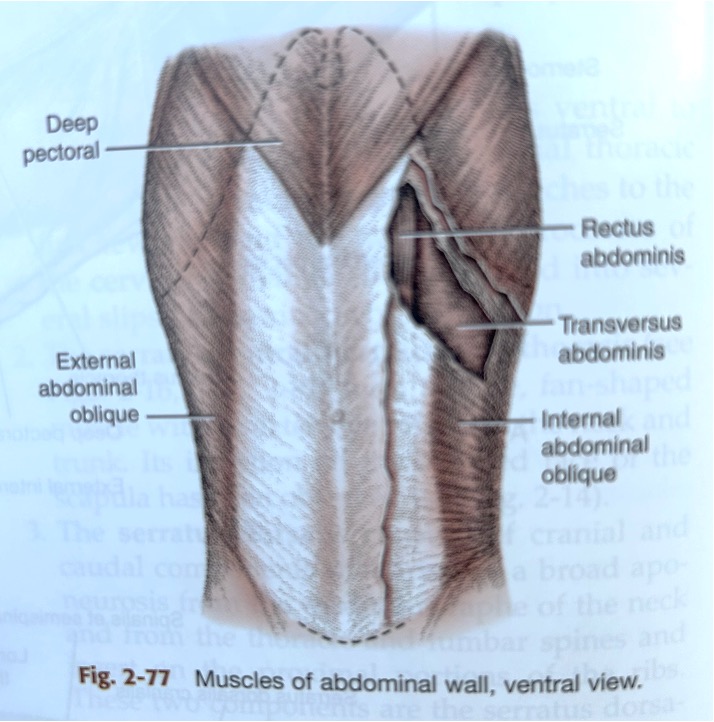
Building on the foundational anatomy and characteristics of the canine abdominal muscles (rectus abdominis, external oblique, internal oblique, and transversus abdominis), this post examines their dynamic roles in respiration, locomotion, and posture. Understanding these functions is key for designing effective rehab programs that restore core control, improve breathing efficiency, and enhance mobility.
Abdominal Muscle Function During Respiration (Rehab-Relevant Aspects)
In conscious dogs, abdominal muscles show distinct patterns of activation and length changes during breathing. During quiet breathing, they contribute to expiration through phasic shortening, with greater activity in upright positions. The internal layers (transversus abdominis and internal oblique) often shorten more actively than the external layers.
Under increased ventilatory demands, recruitment intensifies, helping modulate intra-abdominal pressure and optimize diaphragm position for the next inspiration. Studies in awake dogs demonstrate posture-dependent changes in resting length and tidal shortening.
Clinical implications for rehab patients: Conditions like respiratory disease, obesity, pregnancy, or ascites alter abdominal mechanics. Ascites, for example, increases resting muscle length and intra-abdominal pressure initially (enhancing pressure generation up to a point), but excessive fluid leads to over-lengthening, reduced shortening capacity, and diminished effects on lung deflation/ventilation. This can impair breathing efficiency and compound fatigue in patients with concurrent cardiac, hepatic, or mobility issues.
In practice, rehab therapists should monitor respiratory patterns during exercises and incorporate breathing-coordinated core work (e.g., gentle expiratory emphasis) to improve efficiency, especially in obese or post-surgical dogs.
Function and Activation of Abdominal Muscles During Gait and Locomotion
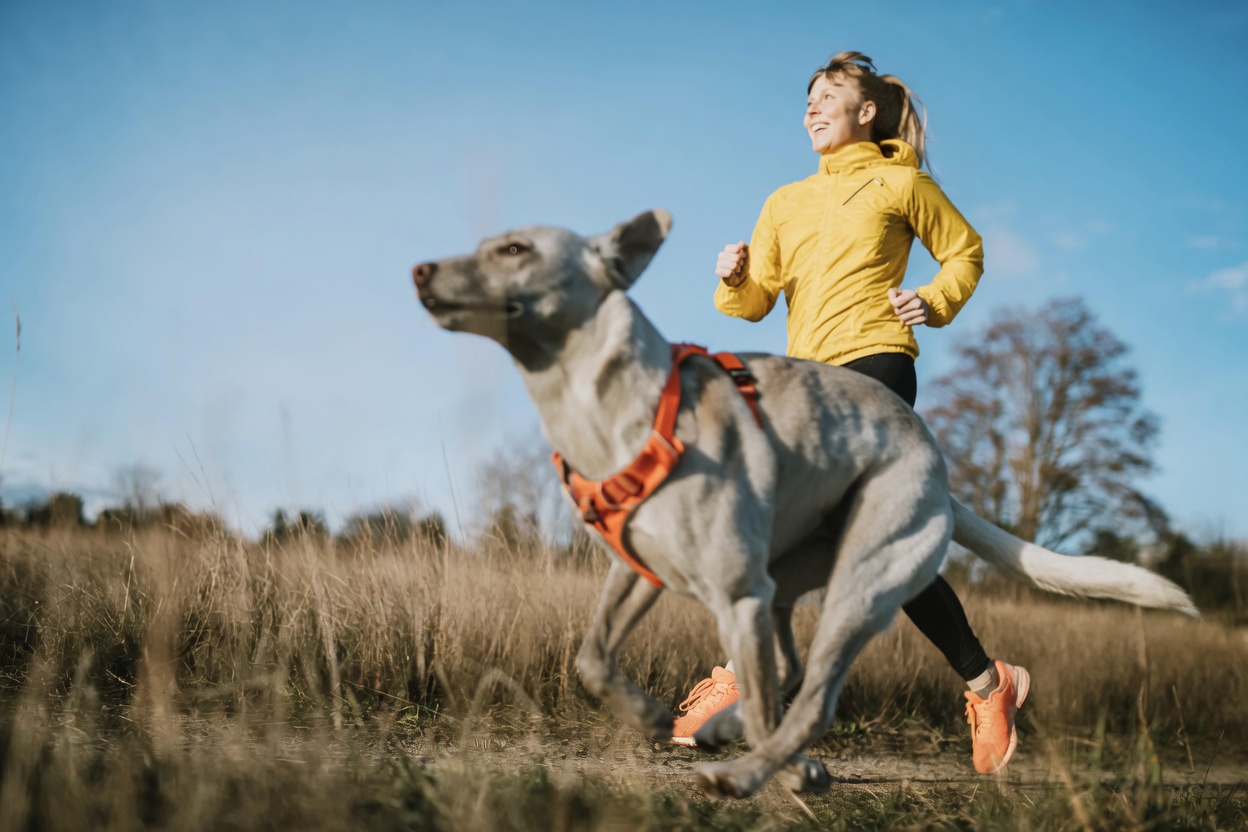
The oblique abdominal muscles (hypaxial) play a key role in trotting dogs. Electromyographic studies show they activate to stabilize the trunk against sagittal shearing torques and inertial forces from limb movement. Activity patterns respond to added mass or trunk loading, supporting sagittal stability rather than pure lateral bending in some contexts.
These muscles help control lateral bending, transfer forces between the forelimbs, hindlimbs, and spine, and maintain trunk rigidity during walking and trotting. This integration is crucial for efficient propulsion and balance.
Relevance to rehabilitation: Weakness or asymmetry in abdominal activation can exacerbate lameness, neurologic gait deficits, or post-surgical issues. Poor trunk stability reduces propulsion, increases compensatory patterns, and slows recovery. Targeted gait training—such as hill walking, cavaletti poles, or plank work—helps retrain these muscles for better limb-spine coordination and overall balance.
Effects of Posture and Position on Abdominal Muscles
Body position significantly influences abdominal muscle behavior. In awake dogs, moving from lateral recumbency to standing shortens the transversus abdominis resting length while lengthening the external oblique; sitting has different effects. All muscles show more active shortening in upright postures, with internal layers often more active.
Conditions like ascites or pregnancy further alter length-tension relationships by increasing resting length and abdominal pressure, initially boosting pressure generation but eventually impairing function with severe distension. Such is the case with obesity as well.
Why These Topics Matter in Canine Rehab
Integrating respiratory, gait, and postural considerations prevents secondary complications, accelerates recovery, and improves quality of life. Always assess individual patients, as breed, age, and comorbidities influence responses.
Stay Tuned
Next up, we’ll visit comparative function of the canine abdominals and the human ‘core’. You don’t want to miss it!
Reference List
- Leevers AM, Road JD. (1993). Effects of posture on abdominal muscle shortening in awake dogs. Journal of Applied Physiology. https://pubmed.ncbi.nlm.nih.gov/8282589/
- Fife MM, et al. (2001). Function of the oblique hypaxial muscles in trotting dogs. Journal of Experimental Biology. https://pubmed.ncbi.nlm.nih.gov/11507119/
- Leduc D, De Troyer A. (2008). Impact of acute ascites on the action of the canine abdominal muscles. Journal of Applied Physiology. https://pubmed.ncbi.nlm.nih.gov/18323460/
- De Troyer A, et al. (1989). Abdominal muscle use during breathing in unanesthetized dogs. Journal of Applied Physiology. https://pubmed.ncbi.nlm.nih.gov/2521846/