Laurie's Blogs.

Oct 2026
Sciatic Nerve Injuries in Dogs and Cats: What Motor Function and Electrodiagnostics Can Tell Us About Recovery
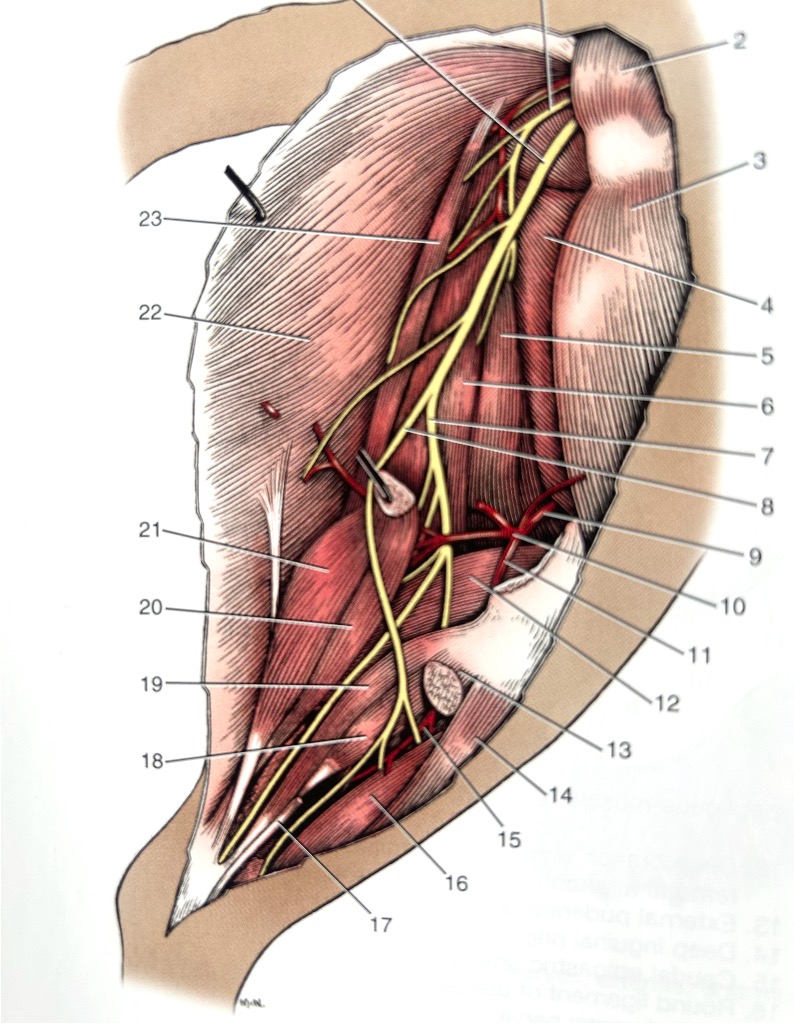
Sciatic nerve injuries show up in rehab practices more often than the literature suggests—until now. A recent retrospective study looked at 38 dogs and 10 cats with confirmed traumatic or iatrogenic sciatic nerve injury, tracking clinical signs, electrodiagnostic findings, and long-term outcome.
Surgery was the leading cause (42%), followed by trauma (33%). In dogs, wild boar bites (!!) accounted for nearly a quarter of cases—an occupational hazard in regions where hunting is common. Cats saw more pelvic trauma and the occasional intramuscular injection gone wrong. Mean time from injury to electrodiagnostic evaluation was roughly two months, which is realistic for referral cases but long enough that some spontaneous recovery windows had already closed.
The standout clinical finding was straightforward: the ability to flex and extend the hock was significantly associated with a positive outcome in dogs. Sensory function (presence or absence of nociception in the tibial or peroneal autonomous zones) was not. Motor capacity of the tarsus appears to be a better early prognostic marker than sensation alone. This makes sense physiologically—the tibial nerve is critical for weight-bearing extension, while pure sensory loss does not preclude axonal regrowth when the connective tissue sheath is intact.
Electrodiagnostics added another layer. Compound motor action potential (CMAP) amplitude recorded from proximal stimulation of the sciatic-tibial nerve predicted outcome in dogs. A cut-off of 1.45 mV offered 100% specificity for positive outcome (sensitivity was more modest at 58%). In plain terms, if the CMAP is above that threshold, the odds of meaningful motor recovery are substantially better. Values below it do not automatically doom the limb, but they should prompt closer monitoring and earlier discussions about orthotic support, intensive physiotherapy, or salvage options. The same cut-off held when the analysis was limited to dogs evaluated within 90 days of injury.
Owners of 38 animals completed quality-of-life questionnaires. Most rated their pet’s quality of life as good or excellent regardless of whether the limb was salvaged or amputated. Owner-pet relationships were unchanged or improved in the majority of cases. Negative clinical outcome did not significantly degrade perceived quality of life. This is consistent with earlier brachial plexus work and is useful information when counseling clients facing amputation decisions.
For the rehabilitation practitioner, the practical takeaways are clear. Early assessment of hock motor function and, when available, CMAP amplitude can help set realistic timelines and guide intervention intensity. The paper states the following as well:
“With or without surgical intervention, physiotherapy and the use of tarsus-foot orthosis might be suggested as soon as possible in veterinary patients regardless of predicted outcome. Indeed, physiotherapy would help maintain muscle tone and avoid fibrosis, whereas the use of orthosis could stabilize the hock joint and prevent cutaneous lesions arising from dragging the hindlimb. When paresthesia and automutilation occur, or in absence of clinical improvement, hindlimb amputation should be considered.”
There you go, just a short little snippet of learning for your week ahead!
Cheers! Laurie
Reference
Dell’Apa D, Auletta L, Okonji S, et al. Traumatic and iatrogenic sciatic nerve injury in 38 dogs and 10 cats: Clinical and electrodiagnostic findings. *J Vet Intern Med*. 2024;38(3):1626–1638. doi:10.1111/jvim.17076